Meta · Facebook Reality Labs
Virtual Whiteboard Exploration
Oculus Workrooms · AR/VR
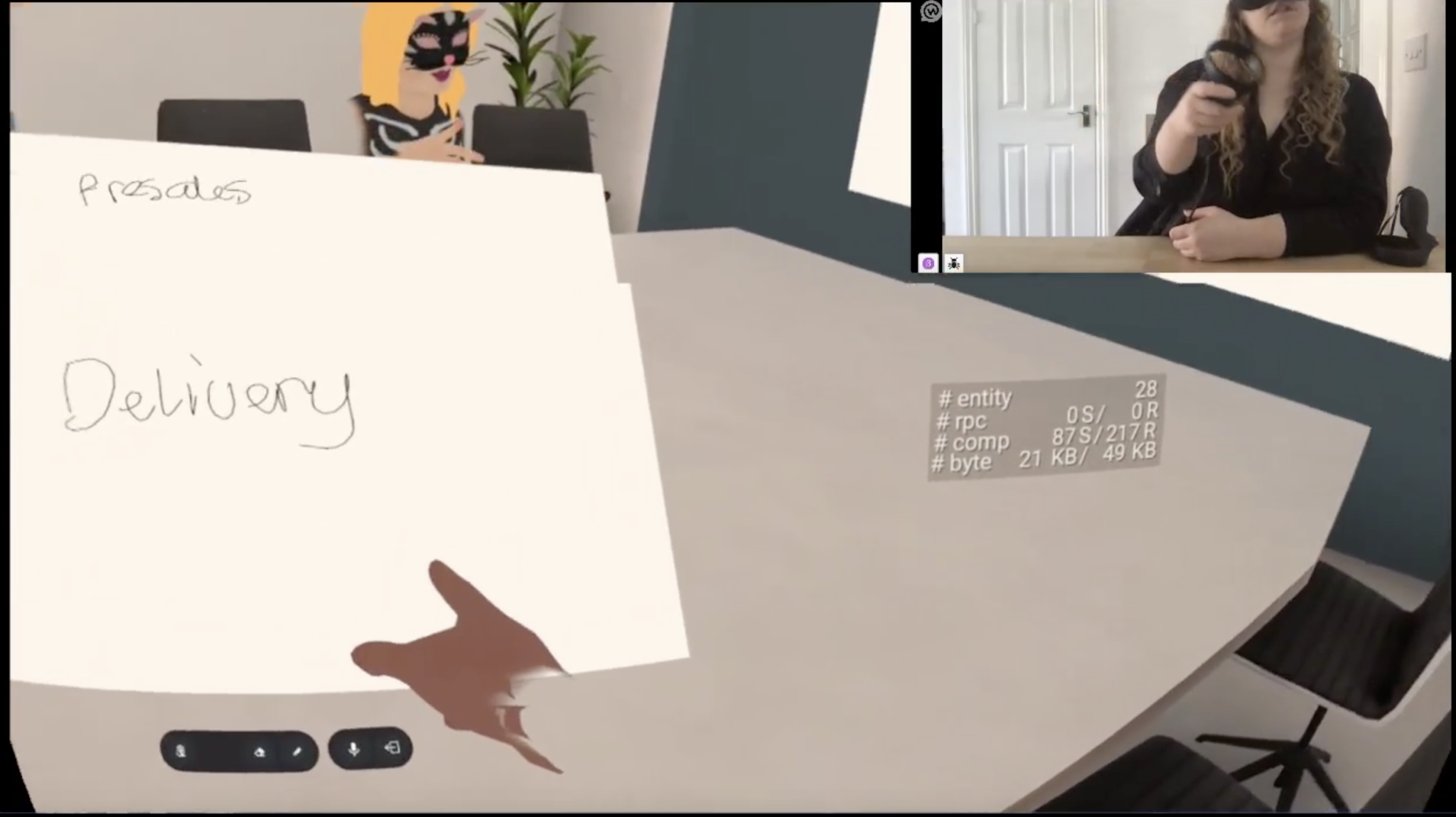
Can you whiteboard in VR without a stylus?
Most people assumed you couldn't. The research said otherwise, but only after we asked the right question.
At a glance
| Company | Meta (Facebook Reality Labs) |
|---|---|
| Product | Oculus Workrooms |
| Role | Senior UX Researcher |
| Type | Interviews · Usability testing · Concept testing · Literature review |
| Participants | 17 |
| Timeline | 6 weeks before a decision to invest in stylus development |
| Outcomes | Whiteboarding without a stylus confirmed viable · Seated mode added to MVP · Reframed whiteboard UX around safety and social comfort · Playbook created for remote moderated VR research |
The context
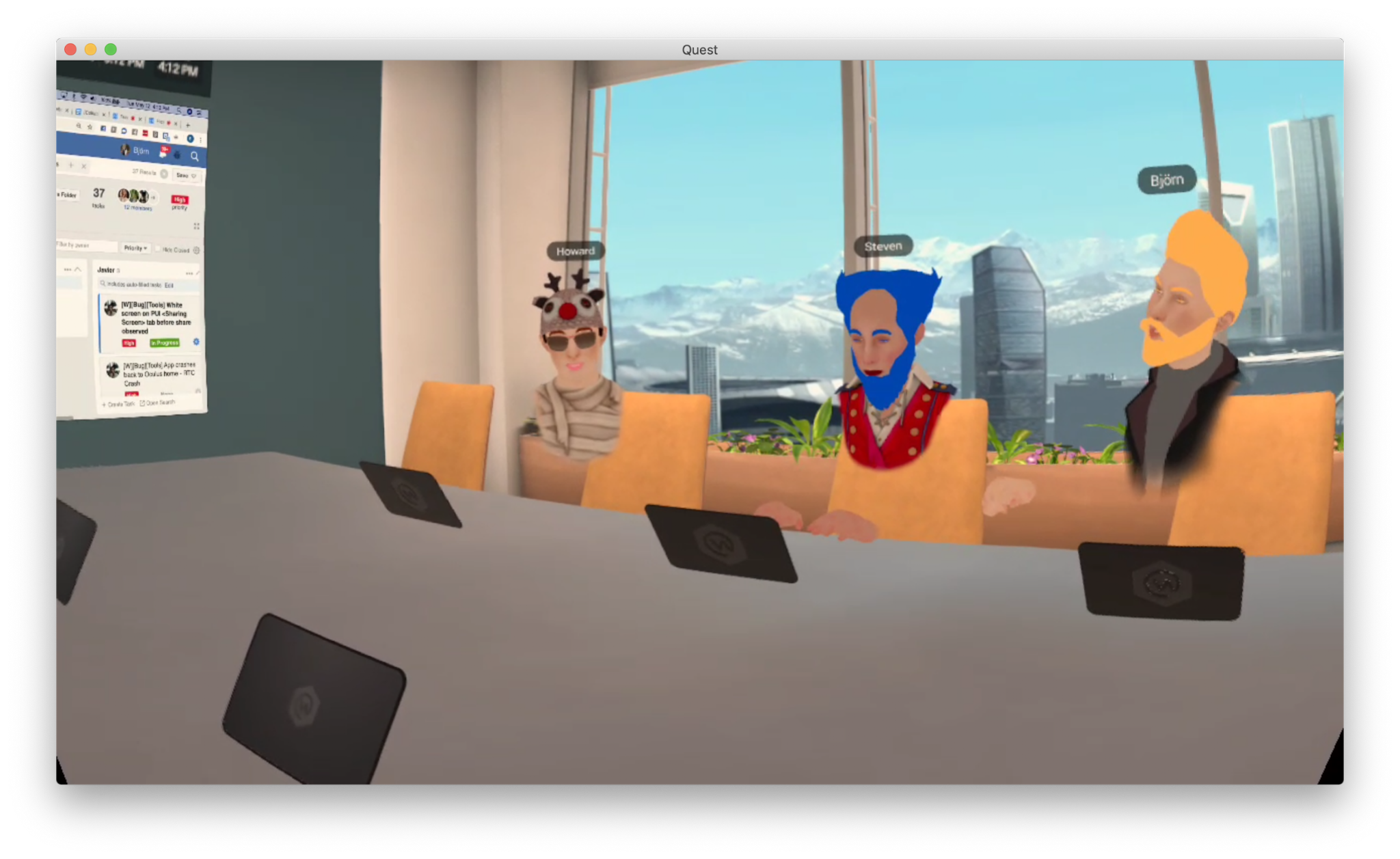
Workrooms was Facebook's bet on the future of remote collaboration: a virtual meeting room where distributed teams could work together as avatars. The team needed a whiteboard. The question was how to make it work without a stylus, which added hardware cost and friction.
The right question
The team started with: can we ship a VR whiteboard without a stylus?
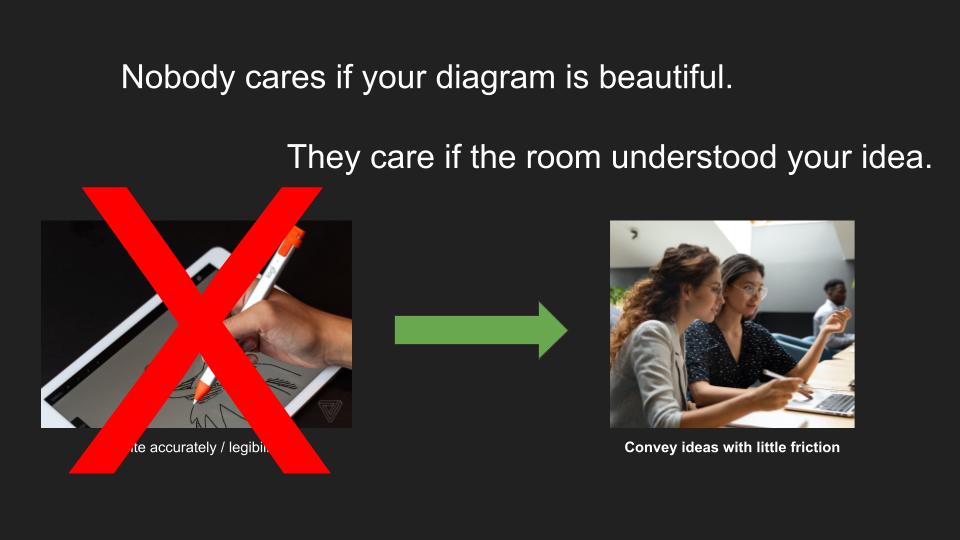
That is an engineering question. It assumes the answer is in the hardware. Before running a single test, I did a literature review on how and why people actually use whiteboards. What it revealed was simple and easy to overlook: legibility is secondary to ease of use. Nobody cares if the diagram is beautiful. They care if the room understood the idea.
That changed the research questions entirely. Can whiteboarding without a stylus help people convey ideas and support conversation? And if so, which input method does it best, and why?
What I did
- Literature review on whiteboard use before any user sessions. Understanding why people use whiteboards, not just how.
- Spent 30 hours in VR over 9 days to understand the medium before asking others to use it. You cannot research a product you have not lived in.
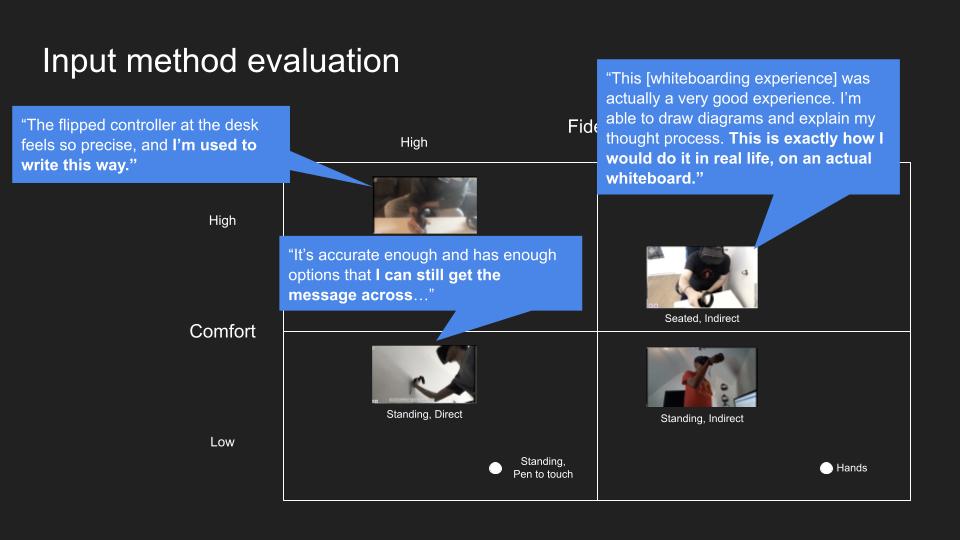
- Ran usability testing with 17 participants comparing five input methods across two postures, seated and standing, measuring fidelity and comfort.
- Built an assumption testing grid to track each participant's experience across all input conditions and reduce subjective bias.
- Synthesised and presented results fast. The team needed findings in days, not weeks.
- Helped the product director build a business case for investing in a stylus as a future north star, even though the MVP would not include one.
What we found
The flipped controller, used seated at a virtual desk, scored highest on both comfort and fidelity. Writing at a desk felt familiar. Standing at a virtual wall felt tiring.
"This was actually a very good experience. I'm able to draw diagrams and explain my thought process. This is exactly how I would do it in real life, on an actual whiteboard."
Not a stylus. Not hands. A reused controller, held differently, at a desk.
The findings we didn't go looking for
The most interesting outcome was not in the original hypothesis. Participants using the seated mode described something beyond comfort. The desk felt like a safe space. Mixed reality while standing was disorienting. Sitting grounded them.
"I like being at my computer desk, so I'm not disoriented. I know I'm in my safe space when I don't need to get up and set something up against the wall."
"It's a whole new experience to share what you are doing at your desk with the rest of the room, without the pressure of feeling like you are standing up in front of everybody."
The seated mode reframed the entire whiteboard experience. Not just a usability win. A social and psychological one.
The hard part
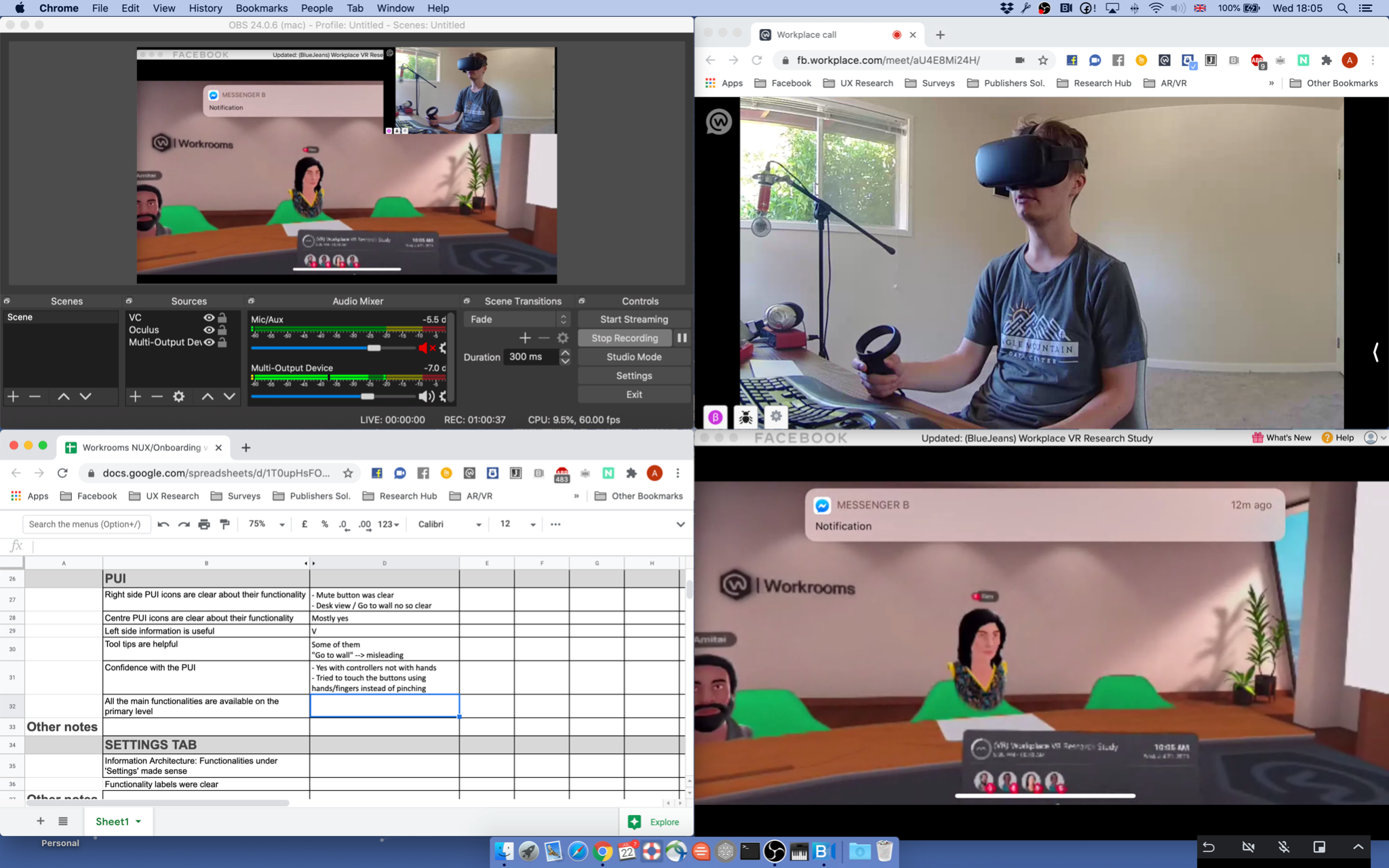
Moderating a usability test in VR, remotely, while participants were at home. No one had done this at Facebook before. I had to figure out the technical setup from scratch: OBS for screen capture, a live Workrooms session to observe from inside VR, and a shared spreadsheet for real-time notes.
Outcome
Whiteboarding in VR without a stylus was confirmed viable. Seated mode was added to the MVP. The research reframed the whiteboard UX entirely, shifting the lens from fidelity to safety and social comfort.
A playbook for remote moderated VR research was created. The approach was adopted by other research teams at Facebook.
Reflection
The initial product assumption was to replicate the physical whiteboard in VR and to worry about reduced fidelity as the main risk. But that framing missed the point. The question was not whether a virtual whiteboard could match a physical one. It was why people use whiteboards in the first place.
When we understood that, a completely different set of possibilities opened up. Seated mode was not a compromise. It was something a physical whiteboard could never offer: contributing to a shared surface without standing up in front of the room. VR does not have to be a replica. That is the interesting part.